
White is easy to maintain, looks brighter than other colours over a longer period, is the least commonly rejected colour among family members, has high resale value, provides better safety at night, absorbs less heat in the summer season, makes small cars look bigger, and is not considered inauspicious.
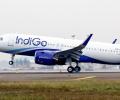
'Domestic will remain very much the core of what IndiGo is.' 'But the emphasis in our next growth phase is going to be on the international side.'

India is now much ahead of other large railway networks in the world in terms of electrification -- with the US at just 1 per cent, China at 72 per cent and Europe at 60 per cent.

With just a month left in this financial year, electric two-wheeler sales, so far, are at just 62 per cent of the ambitious target of 1 million units set for 2022-23 by the NITI Aayog. According to VAHAN data, compiled by the Society of Manufacturers of Electric Vehicles (SMEV), 620,006 units of electric two-wheelers were sold across the country in FY23 until February 21. Though the industry may miss the 1-million target, sales in FY23 are already up 146 per cent from 249,621 units sold in FY22.
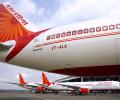
In a LinkedIn post on Wednesday, February 15, night, Nipun Aggarwal had said Air India, in addition to the order of 470 planes, had the option to purchase 370 aircraft from Airbus and Boeing.
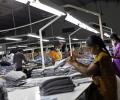
Following a gap of several months, global brands like Walmart have started lifting orders from Tiruppur's garment makers, leading to growth in knitwear exports in January after five months. Knitwear exports from Tiruppur increased 1.5 per cent in dollar terms and 11.6 per cent in rupee terms in January. According to the Tiruppur Exporters' Association (TEA), global majors have started placing more orders from the region.

AzaadiSAT had around 75 small payloads developed by schoolgirls of 75 rural schools.

Maruti Suzuki's contribution to the sales revenue of its Japanese parent, Suzuki Motor Corporation (SMC), has touched the highest-ever figure during April-December of FY23. According to SMC's results declared on Tuesday, Maruti's share in its global revenues jumped from 33.42 per cent in April-December of FY22 to 40.93 per cent in the corresponding period of FY23.
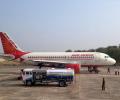
When the Tatas re-boarded Air India on January 27 last year, the price of aviation turbine fuel was at over Rs 80,000 per kilolitre. Rupee was trading at around Rs 74 to a US dollar. The Omicron variant of Covid-19 was in prevalence - barely a week earlier, India had reported over 340,000 cases on a single day. Seven-day home quarantine of international travellers was the norm.

Local residents say until about two months ago, this board carried the name of Motorola, which once had a manufacturing unit in Sriperumbudur, 40-odd km from Chennai in Tamil Nadu. In May 2020, Luxshare Precision Industry Co, a China-headquartered AirPods and iPhone assembler, had entered into a deal with the Tamil Nadu government to take over the defunct Motorola unit.

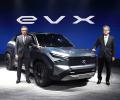
Maruti will launch its first electric vehicle (EV) in the next financial year (FY24), and will roll out six EVs in the country by FY30, the automaker's parent firm Suzuki said on Thursday.
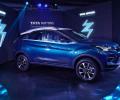
After clocking losses for seven straight quarters, Tata Motors on Wednesday posted a consolidated net profit of Rs 3,043 crore in the third quarter (Q3) of 2022-23. This came on the back of a strong order book, better semiconductor chip supply, tempered commodity prices, and a better product mix. "We remain cautiously optimistic about the demand situation, notwithstanding the global uncertainty.

Both are finding it difficult to sell one each of their plants -- Chennai Maraimalai Nagar (Ford) and Talegaon near Pune (GM) -- and are finding the road blocked by employee severance snarl-ups, report Sohini Das and Shine Jacob.
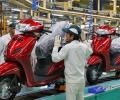
Honda Motorcycle and Scooter India (HMSI), the country's second-largest two-wheeler manufacturer, is planning to launch its first electric vehicle (EV) here by March next year, said CEO & MD Atsushi Ogata on Monday. The company would also enter the low-end motorcycle market in March by launching a 100cc engine bike at a price that will "positively shock" customers, he said while speaking with reporters, after launching the Activa with Honda Smart Key. HMSI's first EV, an electric scooter, will have a fixed battery and the second model will have two swappable batteries, Ogata explained.

IndiGo carried 69.09 million passengers last year, compared to 67.9 million in 2019.
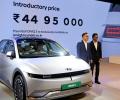
'The semiconductor supply is constantly improving, with visible green-shoots in the situation as compared to earlier part of last year'

'In terms of semiconductors, challenges do remain in the pan industry, but I think we are much better than where we were a year or so back.'

According to reports, by last year, the company has helped its customers save 15 per cent on costs -- around 5-6 per cent on fuel and 15 per cent on fleet utilisation through digital measures.
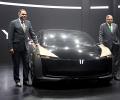
'Battery electric, hydrogen fuel cell and hydrogen ICE, could be the three technologies which have the potential of being zero emission and that are what we will have to work on,'
According to Siam data, Indian auto companies sold 982,456 units of utility vehicles in the first half of FY23, a 50.29 per cent growth over the corresponding period last year.
 © 2026 Rediff.com - Advertise with us - Disclaimer - Privacy Policy - Sitemap - Feedback - About us - Terms of use - Grievances